
VANCOUVER, BC / ACCESS Newswire / June 10, 2026 / Camino Minerals Corporation (TSXV:COR)(OTCID:CAMZF) ("Camino" or the "Company") is pleased to announce the exploration results from Phase 2 of the recent drilling campaign at its Costa de Cobre project ("Costa de Cobre" or the "Project" (formerly known as "Los Chapitos"(1)) in Peru. Camino completed five drill holes along the Diva trend corridor, where drilling activities focused on the Adriana target with the objective of expanding the known mineralized body and improving the understanding of the scale and continuity of the mineralized system. The maximum drill hole depth was 260 metres and all five drill holes intercepted strong copper mineralization and spanned a strike length of approximately 400 metres.
Key highlights of recent Costa de Cobre drill holes:
Adriana: DCH-131:
69.8 m @ 0.47% Cu & 4.17 g/t Ag, including
- 32.0 m @ 0.75% Cu & 6.50 g/t Ag, and
9.75m @ 1.25% Cu & 6.46 g/t Ag, including
- 3.90 m @ 2.99% Cu & 15.63 g/t Ag
Adriana DCH-132:
44.0 m @ 0.38% Cu & 1.87 g/t Ag, and
77.6 m @ 0.36% Cu & 1.63 g/t Ag, and
17.6 m @ 2.49% Cu & 12.58 g/t Ag
Adriana: DCH-133:
76.2 m @ 0.88% Cu & 2.03 g/t Ag, including
- 16.25 m @ 2.67% Cu & 6.82 g/t Ag
Adriana: DCH-134:
53.8 m @ 0.77% Cu & 4.45 g/t Ag, including
- 40.8 m @ 0.96% Cu & 5.43 g/t Ag
Adriana: DCH-135:
30.6 m @ 0.45% Cu & 2.38 g/t Ag, including
9.3 m @ 0.96% Cu & 6.12 g/t Ag
Costa de Cobre is Camino's second copper project with partner Nittetsu Mining Co, Ltd. ("Nittetsu"), who is completing a 35% earn-in interest in Costa de Cobre after investing CAD $10 million and after the completion of the current drilling campaign (see news release dated June 14, 2023). Camino is also advancing its Puquios Copper Project in Chile with Nittetsu Mining toward mine construction and development (see news release dated April 17, 2025. Construction is expected to commence in the summer, subject to securing project financing and an affirmative final investment decision.
The Costa de Cobre copper project offers growth potential through both resource expansion and new discoveries, supported by established infrastructure, strategic partnerships with Denham Capital and Nittetsu Mining, and exposure to the rapidly growing global copper market.
"These results continue to demonstrate good continuity and grades along the Diva trend at Adriana, with numerous additional high priority targets on the property including along the Diva, La Estancia and Atajo trends. Subject to further exploration of such high priority targets and the delineation of a mineral resource, we envision a copper mine that would be started around an expanded Adriana zone, and possibly connecting to feeder structures at depth, and include additional expanded zones of copper mineralization such as Lourdes located 1.4 km to the north, or Katty located 1 km to the south, and potential copper discoveries along the other La Estancia and Atajo trends. Costa de Cobre is located at low elevation along Peru's southern coast, close to major infrastructure, including the recently announced construction of the San Juan de Marcona port terminal, which will enhance future logistics and development in the region. Camino is now positioned with active growth initiatives in both Peru and Chile. With construction preparations advancing at Puquios and continued exploration programs planned in both Chile and Peru, we believe 2026 will be an active and transformative year for the Company as we build a leading copper development and exploration copper platform," said Jay Chmelauskas, CEO of Camino.
Nittetsu Mining's exploration manager, Yoshikazu Fujimoto stated, "Nittetsu has completed the three year earn-in at Costa de Cobre with these results continuing to demonstrate high-grade copper intercepts. Costa de Cobre hosts many discovery targets, and we have only drilled a fraction of the property's multiple copper trends. We now plan to advance the project to establish our joint venture with Camino, where Nittetsu will maintain a 35% Project interest."
"The integration of geological, structural, and drilling information has enhanced our ability to predict and target copper mineralization across Costa de Cobre. This work has not only contributed to recent drilling success but has also highlighted multiple opportunities to expand the mineralized footprint to unlock the broader district-scale potential of the project (Figure 1)," said Paulo Rodriguez and Jheferson Alcocer, geologists at Camino in Peru.
Geological Discussion
The recently completed 990.70 metres drilling program has increased total drilling at the Costa de Cobre Copper Project to 29,650 metres, further strengthening the Project's growing exploration database. Notably, approximately 91% of all historical drilling has been focused along the highly prospective Diva trend, extending approximately 7 km, underscoring the Company's strategic emphasis on this important copper corridor.
In addition to the Diva trend, other major structural corridors, such as La Estancia and Atajo, extending approximately 18 km and 8 km, respectively, remain significant, underexplored, and present compelling targets for future drilling campaigns.
Drilling in the vicinity of the Diva trend has expanded the mineralized footprint within the Adriana zone, highlighting the growth potential of the mineralized body. Five drill holes were completed along the highly prospective Adriana zone (holes DCH-131, DCH-132, DCH-133, DCH-134, and DCH-135) (Figure 2).
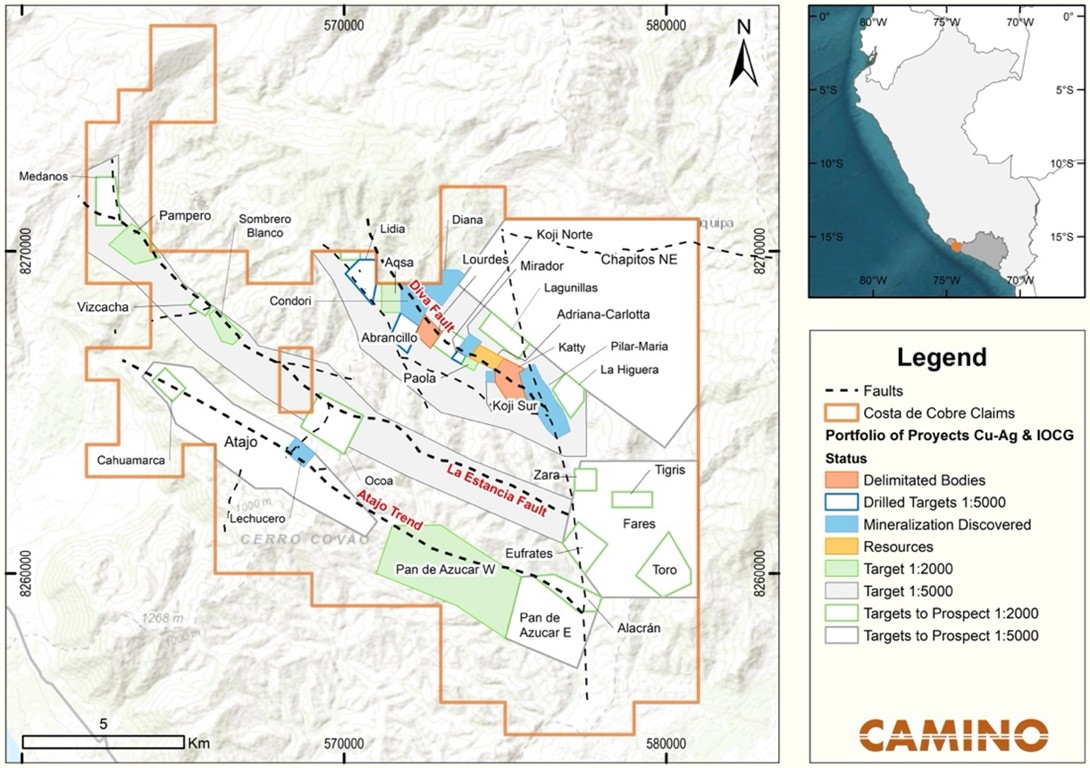
Figure 1. Map Showing the three copper corridors at Costa de Cobre project, Diva, La Estancia and Atajo trends.
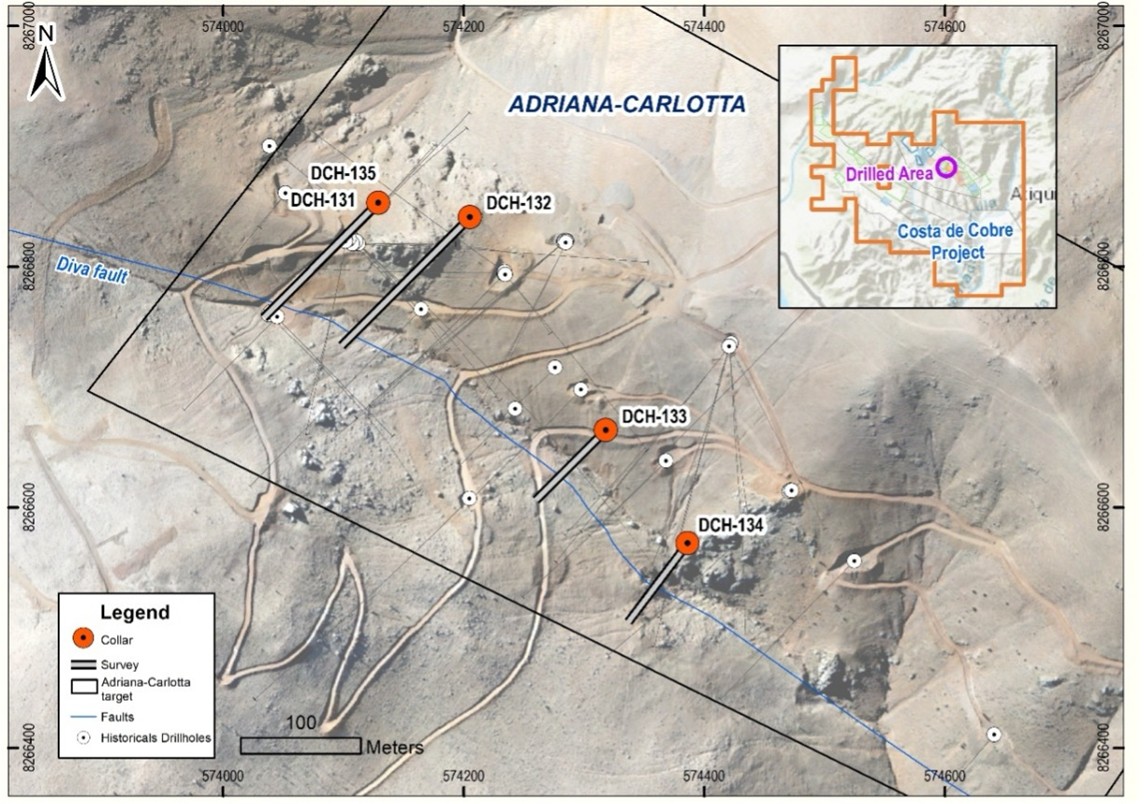
Figure 2. Target location and holes drilled in the 2026 drilling campaign.
HOLE ID | EAST | NORTH | AZIMUTH | DIP | DEPTH (M) | FROM | TO | WIDTH (M) | GRADE (% Cu) | GRADE (g/t Ag) | AREA |
DCH-131 | 574129.00 | 8266853.00 | 225.00 | -50.00 | 188.80 | 7.40 | 20.20 | 12.80 | 0.57 | 6.93 |
|
and | 30.20 | 100.00 | 69.80 | 0.47 | 4.17 |
| |||||
incl | 45.50 | 77.50 | 32.00 | 0.75 | 6.50 |
| |||||
and | 107.70 | 127.50 | 19.80 | 0.41 | 2.32 |
| |||||
and | 132.00 | 139.50 | 7.50 | 0.30 | 3.09 | Adriana | |||||
and | 159.45 | 169.20 | 9.75 | 1.25 | 6.46 |
| |||||
incl | 161.00 | 164.90 | 3.90 | 2.99 | 15.63 |
| |||||
and | 177.50 | 182.25 | 4.75 | 0.12 | 0.25 |
| |||||
DCH-132 | 574205.00 | 8266841.00 | 225.00 | -51.00 | 223.70 | 7.50 | 51.50 | 44.00 | 0.38 | 1.87 |
|
and | 64.50 | 80.00 | 15.50 | 0.20 | 0.98 |
| |||||
and | 96.50 | 174.10 | 77.60 | 0.36 | 1.63 | Adriana | |||||
and | 188.60 | 207.30 | 18.70 | 2.35 | 11.85 |
| |||||
incl | 189.70 | 207.30 | 17.60 | 2.49 | 12.58 |
| |||||
DCH-133 | 574317.50 | 8266664.00 | 225.00 | -62.00 | 169.10 | 19.70 | 24.65 | 4.95 | 0.28 | 2.12 |
|
and | 89.50 | 165.70 | 76.20 | 0.88 | 2.03 | Adriana | |||||
incl | 139.75 | 156.00 | 16.25 | 2.67 | 6.82 |
| |||||
DCH-134 | 574386.00 | 8266570.00 | 217.00 | -51.00 | 117.20 | 0.50 | 54.30 | 53.80 | 0.77 | 4.45 | Adriana |
incl | 6.00 | 46.80 | 40.80 | 0.96 | 5.43 |
| |||||
DCH-135 | 574129.00 | 8266853.00 | 225.00 | -77.00 | 291.90 | 8.70 | 27.70 | 19.00 | 0.40 | 4.72 |
|
incl | 11.50 | 18.70 | 7.20 | 0.79 | 9.33 |
| |||||
and | 54.10 | 84.70 | 30.60 | 0.45 | 2.38 |
| |||||
incl | 66.50 | 75.80 | 9.30 | 0.96 | 6.12 |
| |||||
and | 90.45 | 96.00 | 5.55 | 0.38 | 0.79 |
| |||||
and | 109.50 | 118.50 | 9.00 | 0.40 | 2.26 | Adriana | |||||
and | 138.90 | 141.00 | 2.10 | 0.83 | 1.55 |
| |||||
and | 151.50 | 157.40 | 5.90 | 0.32 | 1.05 |
| |||||
and | 185.95 | 189.00 | 3.05 | 0.27 | 0.57 |
| |||||
and | 251.30 | 267.60 | 16.30 | 0.30 | 0.44 |
| |||||
incl | 254.10 | 260.10 | 6.00 | 0.46 | 0.42 |
|
Notes: Datum for coordinates is WGS84 Zone 18S. Widths are not true widths |
Table 1. Summary of the 2026-1 drilling campaign, Costa de Cobre Copper Project, Peru.
The project area within the Adriana zone is underlain by volcanic rocks of the Chocolate Formation, with pseudo-bedding displaying a strike of N250°-270° and a dip of 12°-30° to the NW. Up to three volcanic units have been identified, consisting of epiclastic sandstones, andesitic lavas, and lapilli tuffs, which are intruded by fine-grained monzodioritic hypabyssal bodies.
Mineralization is structurally controlled by the NW-SE-trending Diva fault, which traverses the drilled area and segments it into the East and West block domains. Copper mineralization is primarily hosted within the volcanic and hypabyssal rocks as breccias and mantos related to this structure. Near the surface, copper oxides are preferentially concentrated within the breccia matrix, partially penetrating the clasts along fractures and microfractures, whereas deeper zones are dominated by sulfides, specifically chalcopyrite and bornite.
Adriana Target
At the Adriana target, recent drilling has intersected significant copper and silver mineralization across multiple intervals. Drill hole DCH-131 returned several mineralized zones, highlighted by an upper intercept of 12.8 m @ 0.57% Cu & 6.93 g/t Ag, a broad zone of 69.8 m @ 0.47% Cu & 4.17 g/t Ag, and a high-grade deeper intercept of 3.90 m @ 2.99% Cu & 15.63 g/t Ag near the bottom of the hole. The system remains open at depth, indicating potential for further mineralization (Figure 3).
Drill hole DCH-132 also intersected substantial continuous mineralization, including a broad shallow interval of 44.0 m @ 0.38% Cu & 1.87 g/t Ag, another thick zone of 77.6 m @ 0.36% Cu & 1.63 g/t Ag, and a deeper high-grade intercept of 17.6 m @ 2.49% Cu & 12.58 g/t Ag (Figure 4).
Additionally, drill hole DCH-133 intercepted an upper interval of 4.95 m @ 0.28% Cu & 2.12 g/t Ag followed by a significant continuous zone of 76.2 m @ 0.88% Cu & 2.03 g/t Ag (Figure 5), while DCH-134 successfully encountered 53.8 m @ 0.77% Cu & 4.45 g/t Ag starting nearly from the surface (0.5 m) (Figure 6).
Notably, assay results for drill hole DCH-135 confirmed multiple stacked mineralized horizons throughout the entire hole, highlighted by an upper zone of 19 m @ 0.40% Cu & 4.72 g/t Ag, an intermediate interval of 9 m @ 0.40% Cu & 2.26 g/t Ag, and a deeper zone of 16.3 m @ 0.30% Cu & 0.44 g/t Ag. These recent intercepts continue to support the continuity of mineralization and indicate the potential for additional high-grade zones within the Adriana zone.
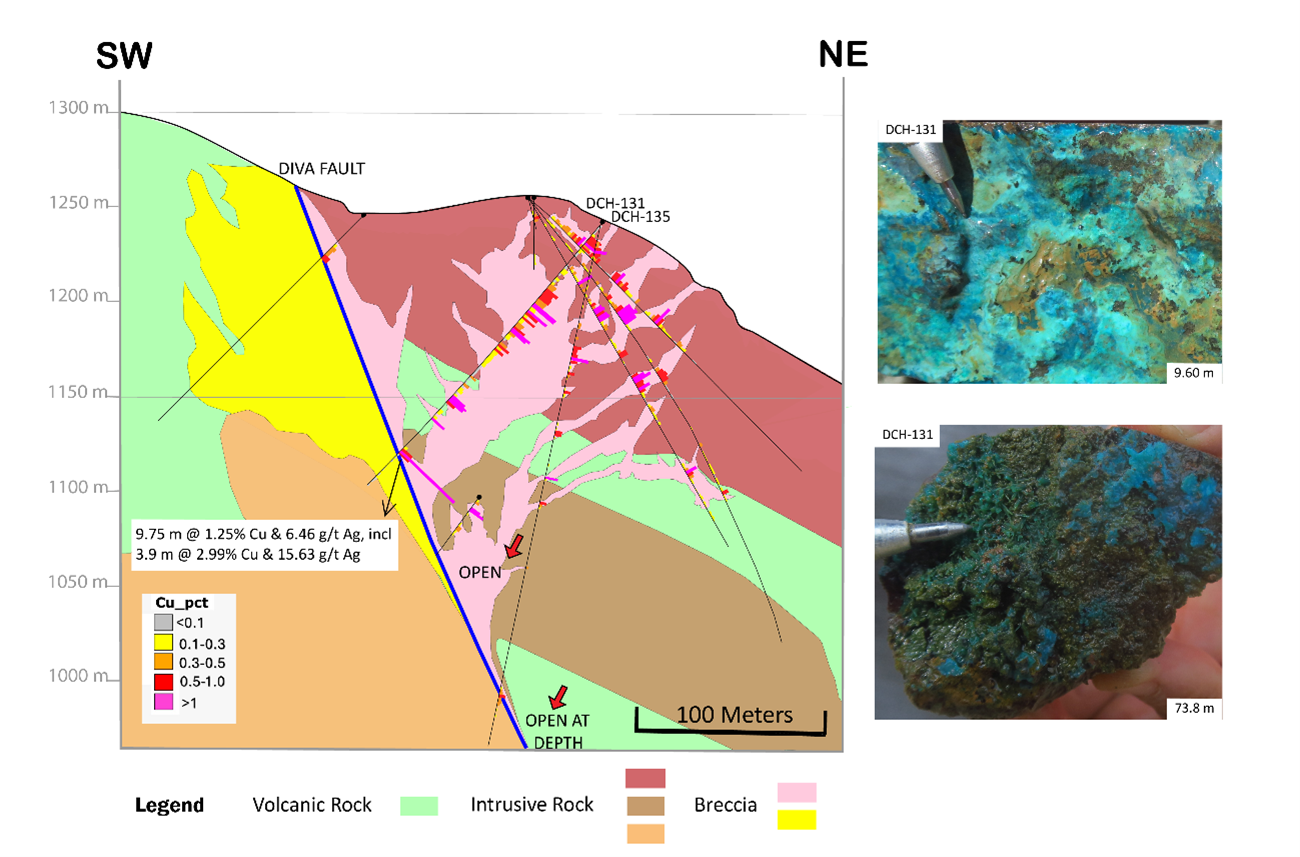
Figure 3. Cross section of copper mineralization at Adriana zone, drill holes DCH-131 and DCH-135.
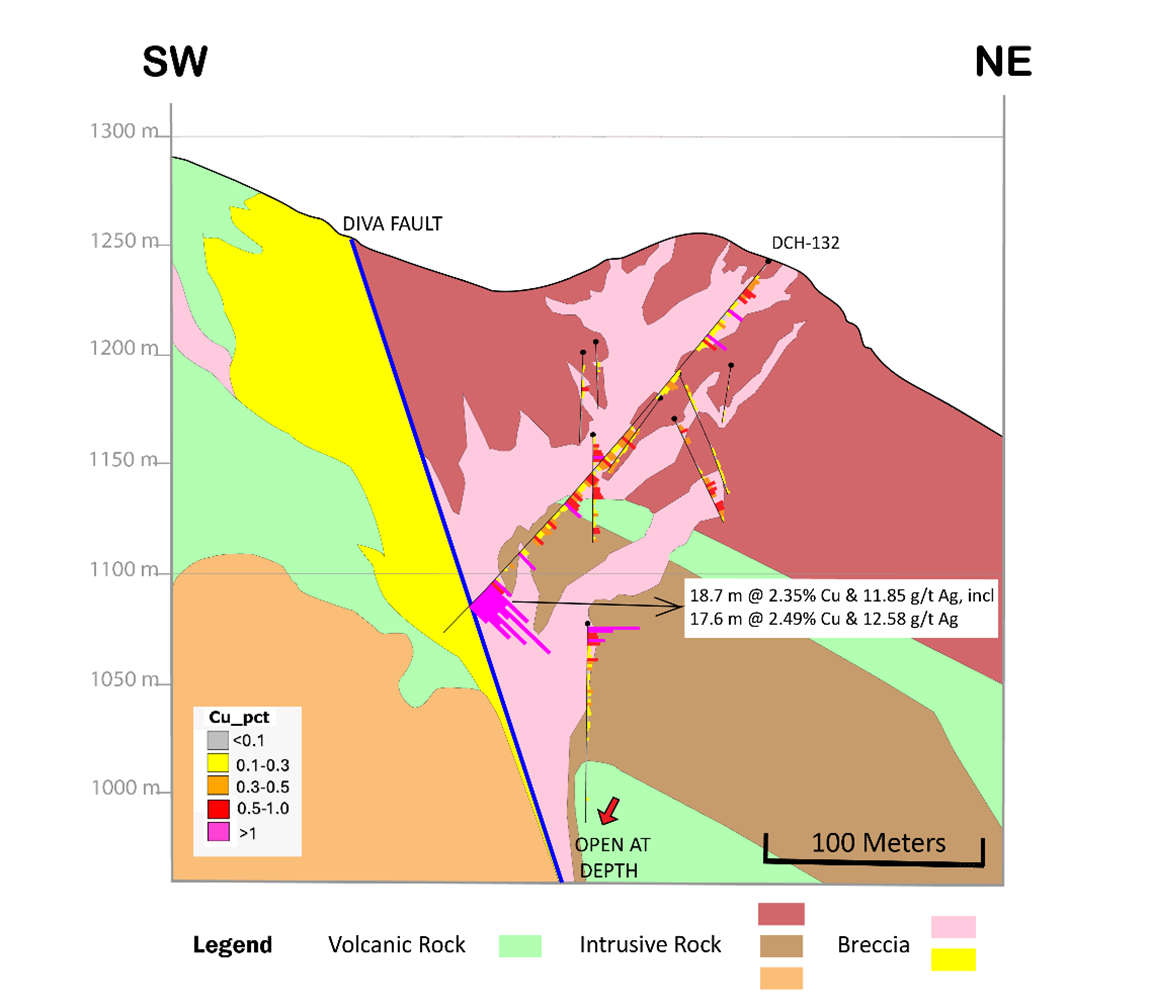
Figure 4. Cross section of copper mineralization at Adriana zone, drill hole DCH-132.
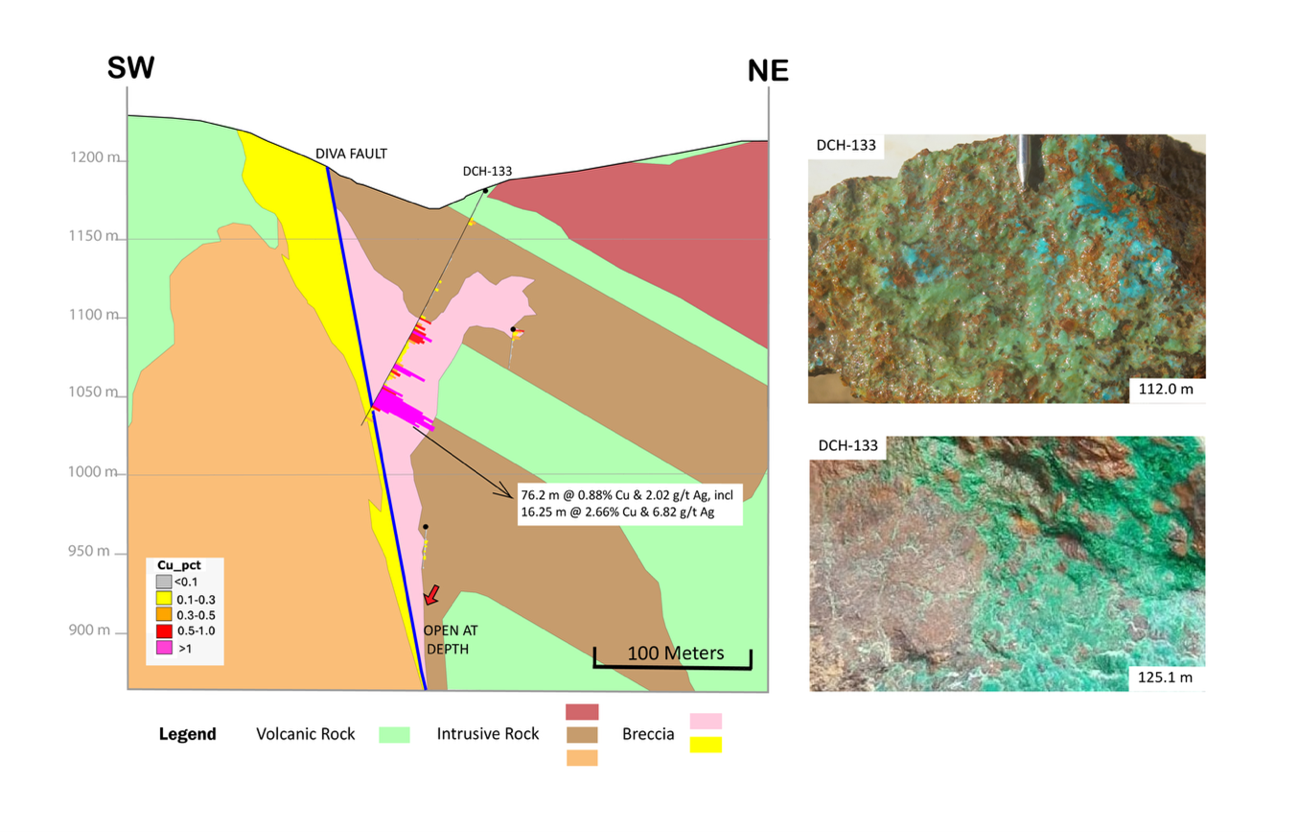
Figure 5. Cross section of copper mineralization at Adriana zone, drill hole DCH-133.
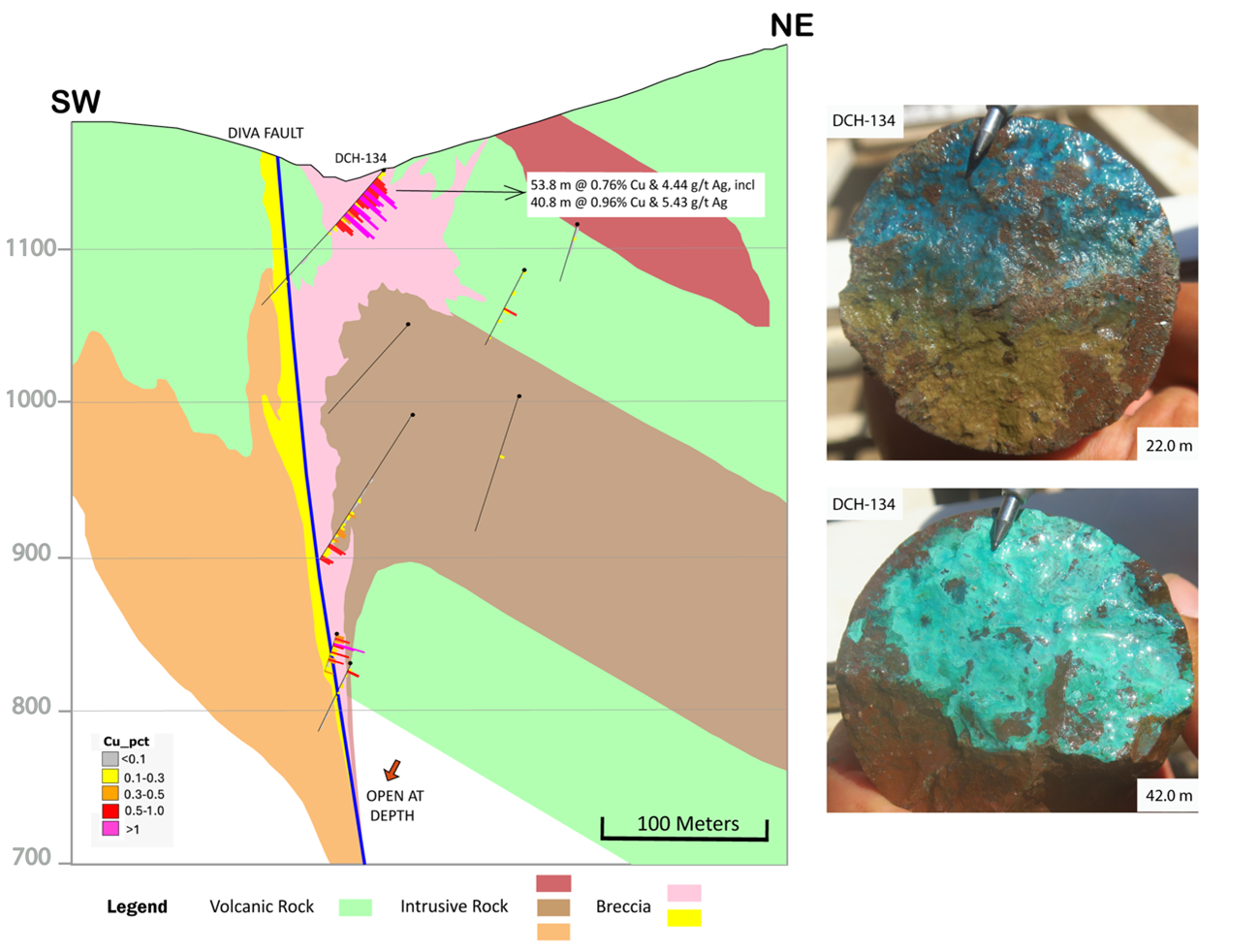
Figure 6. Cross section of copper mineralization at Adriana zone, drill hole DCH-134.
The Costa de Cobre exploration and development program is designed to systematically unlock the value of a district-scale copper-silver system through resource expansion, new discoveries, and progressive de-risking of the asset.
Recent drilling supports the Company's geological model, indicating continuity of mineralization along the Diva Trend and suggesting that the system remains open both at depth and along strike. The next phases of exploration are focused on expanding known mineralized zones, testing multiple high-priority targets across the underexplored Diva, La Estancia, and Atajo structural corridors, and advancing the project toward resource delineation and future development milestones, with only a small portion of the prospective district and three copper corridors across the property systematically drill-tested to date.
Sampling and Assay Procedures
During this campaign, five drillholes were completed. Core has been logged and sampled at the Company's facilities in the town of Chala, 15 km from the project. Industry standard chain of custody and QA/QC practices are followed with samples sent to Lima where they are analyzed by ICP-MS at ALS Chemex Labs' facility, an independent laboratory. The Camino geological team complied with the written internal QA/QC procedures, where the insertion of blank samples, certified international standards (pulps) and duplicates, met the objectives and acceptable results.
(1) All previously disclosed technical and scientific information in respect of the Los Chapitos copper project remains applicable to the Costa de Cobre Project.
About Camino
Camino is a discovery and development stage copper exploration company. The Company has entered into a joint venture partnership with Nittetsu Mining Co., Ltd. to advance the construction-ready Puquios copper project in Chile toward development and production. Camino is advancing its IOCG Costa de Cobre copper project located in Peru through to resource delineation and development, and to add new discoveries. Camino has also permitted the Maria Cecilia copper porphyry project for exploration discovery drilling to add to its NI43-101 resources. In addition, Camino has increased its land position at its copper and silver Plata Dorada project. Camino seeks to acquire a portfolio of advanced copper assets that have the potential to deliver copper into an electrifying copper intensive global economy. For more information, please refer to Camino's website at www.caminocorp.com.
Jose A. Bassan, MSc. Geologist, an independent geologist FAusIMM (CP) 227922, a qualified person as defined by National Instrument 43-101 - Standards of Disclosure for Mineral Projects, has reviewed and approved the technical contents of this document. Mr. Bassan has reviewed and verified relevant data supporting the technical disclosure, including sampling and analytical test data, with such verification including a review of assay certificates, QA/QC results, and drill logs.
ON BEHALF OF THE BOARD
/S/ "Jay Chmelauskas"
President and CEO
For further information, please contact:
Camino Investor Relations
Tel: (604) 493-2058
Neither TSX Venture Exchange nor its Regulation Services Provider (as that term is defined in the policies of the TSX Venture Exchange) accepts responsibility for the adequacy or accuracy of this release.
Cautionary Note Regarding Forward Looking Statements: Certain disclosures in this release constitute forward-looking information. In making the forward-looking disclosures in this release, the Company has applied certain factors and assumptions that are based on the Company's current beliefs as well as assumptions made by and information currently available to the Company. Forward-looking information in the release includes, without limitation, statements with respect to the prospectivity of future exploration work at Costa de Cobre, future planned drilling programs in Peru and Chile, the interpretation of geological models, the potential continuity and extent of mineralized systems, the continuation of drilling with future campaigns, and the prospectivity for copper exploration in new targets. Although the Company considers these assumptions to be reasonable based on information currently available to it, they may prove to be incorrect, and the forward-looking information in this release is subject to numerous risks, uncertainties and other factors that may cause future results to differ materially from those expressed or implied in such forward-looking information. Such risk factors include, among others, that actual results of the Company's exploration activities may be different than those anticipated by management; that geological interpretations, including the continuity or extent of mineralized bodies, may change with additional drilling; that the Company may not realize the benefits of joint ventures and/or strategic partnerships; that the Company may be unable to obtain or may experience delays in obtaining required permits, authorizations and approvals; operational and technical risks inherent in exploration; risks related to third‑party infrastructure development and timing, including the proposed San Juan de Marcona Port; and risks related to the state of equity and commodity markets. Readers are cautioned not to place undue reliance on forward-looking statements. The Company does not intend, and expressly disclaims any intention or obligation to, update or revise any forward-looking statements whether as a result of new information, future events or otherwise, except as required by law.
SOURCE: Camino Minerals Corp